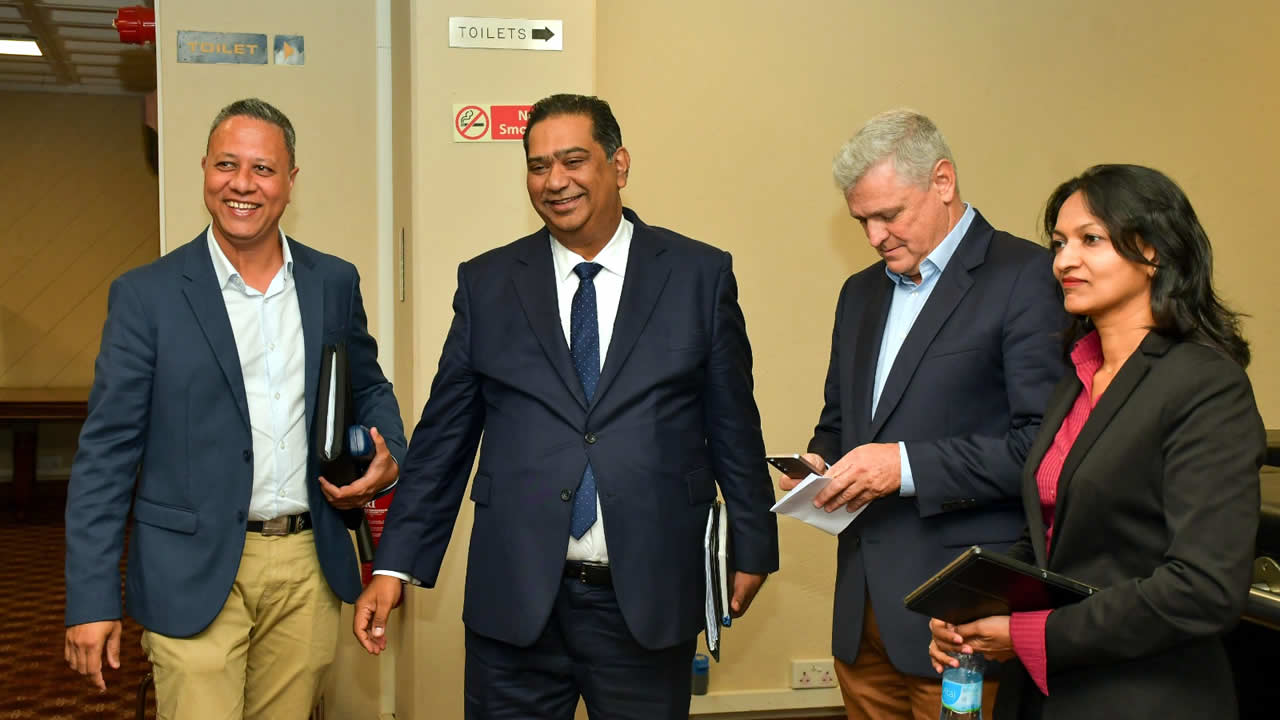
The celebration of Labor Day, May 1, coincides this year with the budgetary consultations which take place in a gloomy atmosphere, in the absence of representatives of trade union centers. This exercise, chaired by Junior Minister Dhaneshwar Damry, is also being carried out in haste, given the fact that the 2026-2027 budget should be presented in June.
Trade unionists deplore the fact that this meeting is not chaired, even at the opening of the proceedings, by the Prime Minister who also holds the portfolio of Minister of Finance. “It is inelegant that these consultations are chaired by a “Junior Minister†while the country is facing major problems such as inflation, lack of control over currencies and rising electricity and product prices. oil tankers which will lead to cascading price increases,” they say. In fact, if no one is unaware of the consequences of the war in the Middle East and the global economic crisis that it causes, they want to have the guarantee from the Prime Minister and Minister of Finance that the strengthening of austerity measures will be accompanied by measures to alleviate the burden weighing on the most vulnerable and SMEs, among others.
In fact, the Gordian knot that the government, and in particular the Minister of Finance, must resolve is to know how far the strategy of practicing an austerity policy can go. At first glance, the only way to reduce the budget deficit is to reduce government spending. This makes sense in accounting terms. But it is obvious that this sometimes has serious consequences. Reducing spending also means slowing down public investment, slowing down consumption and reducing state revenues, notably from value added tax. It would therefore be necessary to go beyond the accounting year to imagine an economic strategy likely to lead to an economic recovery, however weak it may be. It will be necessary to take the risk of introducing incentives in order to attract investments and financial services operators at a time when international financial operators are desperate to leave traditional jurisdictions like Dubai, among others, to invest in stable jurisdictions like Mauritius.
The director of a regional bank recently highlighted the need for the Mauritian government to intervene quickly. However, it seems that this is where the problem lies. We lack speed. Urgent files, particularly in the port region, are being delayed for reasons which are not yet known. We await with interest the report from the International Monetary Fund (IMF), within the framework of Article IV, this Monday. He should
Enjoying Mauritius News in English?
You've used 5 of your 5 free articles today. Subscribe for unlimited access plus a daily newsletter.