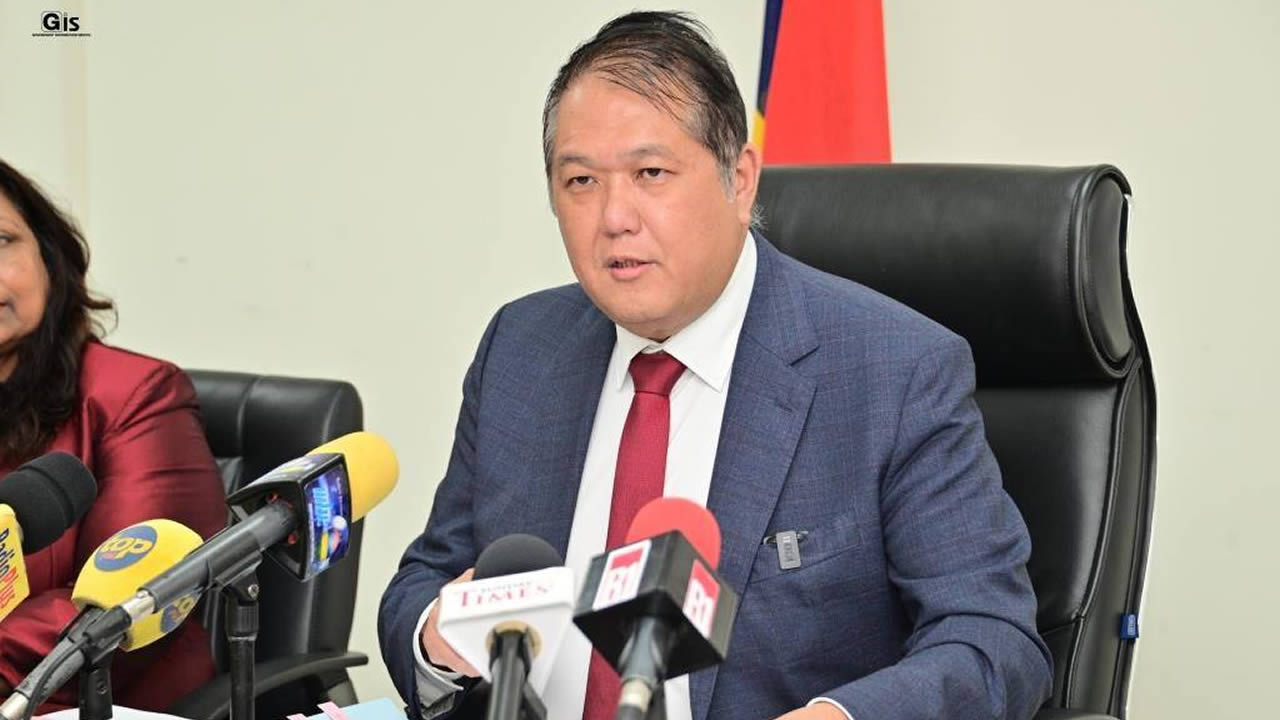
In Ébène, Thursday, the Minister of Commerce, Michael Sik Yuen, placed the economic situation in a tense international context, marked by rising energy prices and pressure on public finances. He insisted on prudence, budgetary rigor and collective responsibility in the face of challenges.
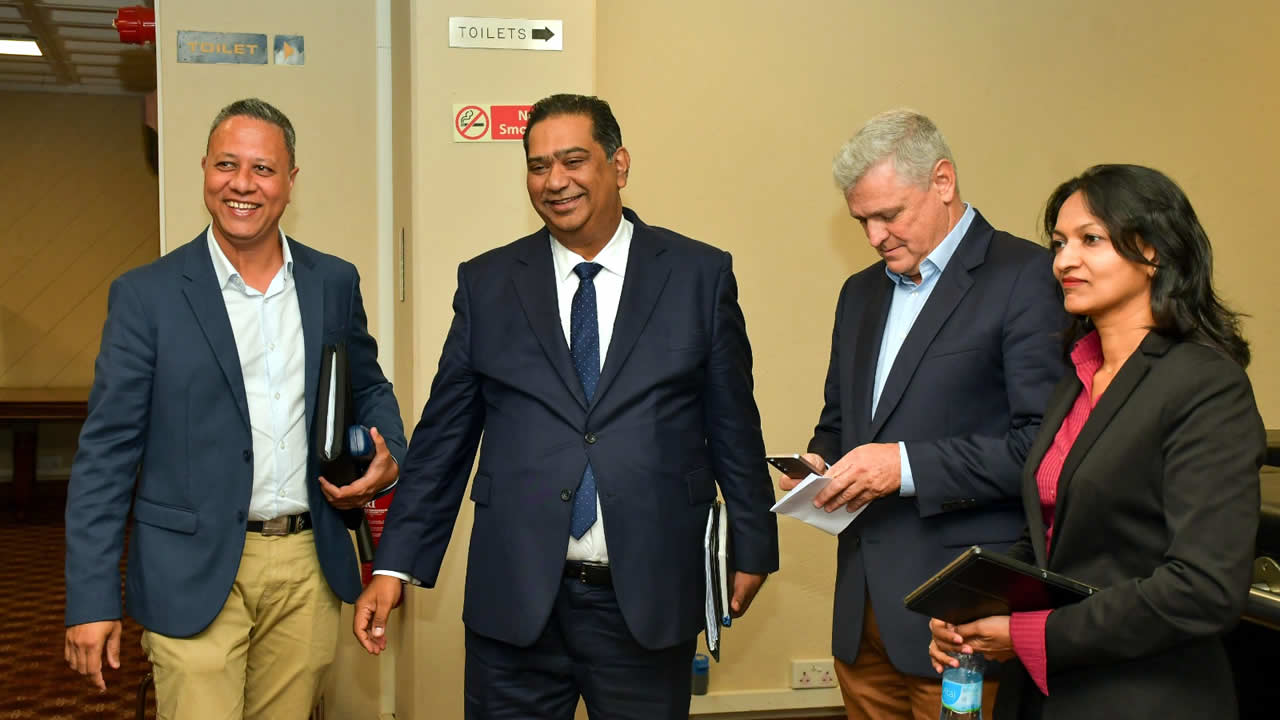
Trade Minister Michael Sik Yuen painted a picture marked by tensions in international markets, pressure on public finances and the need to maintain subsidies on essential products. He called for caution and collective responsibility. He was in front of the press on Thursday April 16 at the SICOM Tower, in Ébène, Michael Sik Yuen placed the situation in a difficult international context. “Across the world, diesel and gasoline are increasing,” he stressed, referring to an environment marked by conflicts and disruptions in supply chains.
According to him, Mauritius is not isolated from these global dynamics, but nevertheless benefits from relative stability thanks to its management mechanisms. However, he insisted on the scale of the inherited challenges. “We have inherited a catastrophic situation with a deficit of Rs 3.4 billion in the Price Stabilization Account (PSA),” he said. The minister explained the role of the PSA, a key mechanism to cushion international price fluctuations.
He took a concrete example to illustrate how it works: a recently arrived cargo would have resulted, according to instant market prices, in a price of Rs 73.55 for gasoline and Rs 109.77 for diesel. “But thanks to the calculation system based on an average of six months, three months in the past and three months forecast, these increases are not immediately passed on. That’s why it’s cheaper,” stressed Michael Sik Yuen. However, this mechanism is under pressure. The minister recalled that the State Trading Corporation (STC) must finance these discrepancies through loans, generating interest and worsening the deficit. He indicated that as of June 30, 2024, the deficit was Rs 109 million and Rs 691 million as of June 30, 2025. “We must redress the situation,” he insisted.
A large part of his speech was devoted to the recurring question of fuel taxation. Why not remove taxes to lower prices? The minister rejected this option, believing that it would have ripple consequences on the entire subsidy system. “We cannot remove the taxes that contribute to the subsidies,” he explained. According to him, the removal of these levies would lead to an increase in the price of household gas and would threaten aid for basic products such as rice ration and flour. He also defended the Mauritian model of social protection: gas at Rs 250, rice ration at less than Rs 30, subsidized bread at Rs 3.90 and free public transport. “It’s too easy to say eliminate taxes,”
Enjoying Mauritius News in English?
You've used 2 of your 5 free articles today. Subscribe for unlimited access plus a daily newsletter.