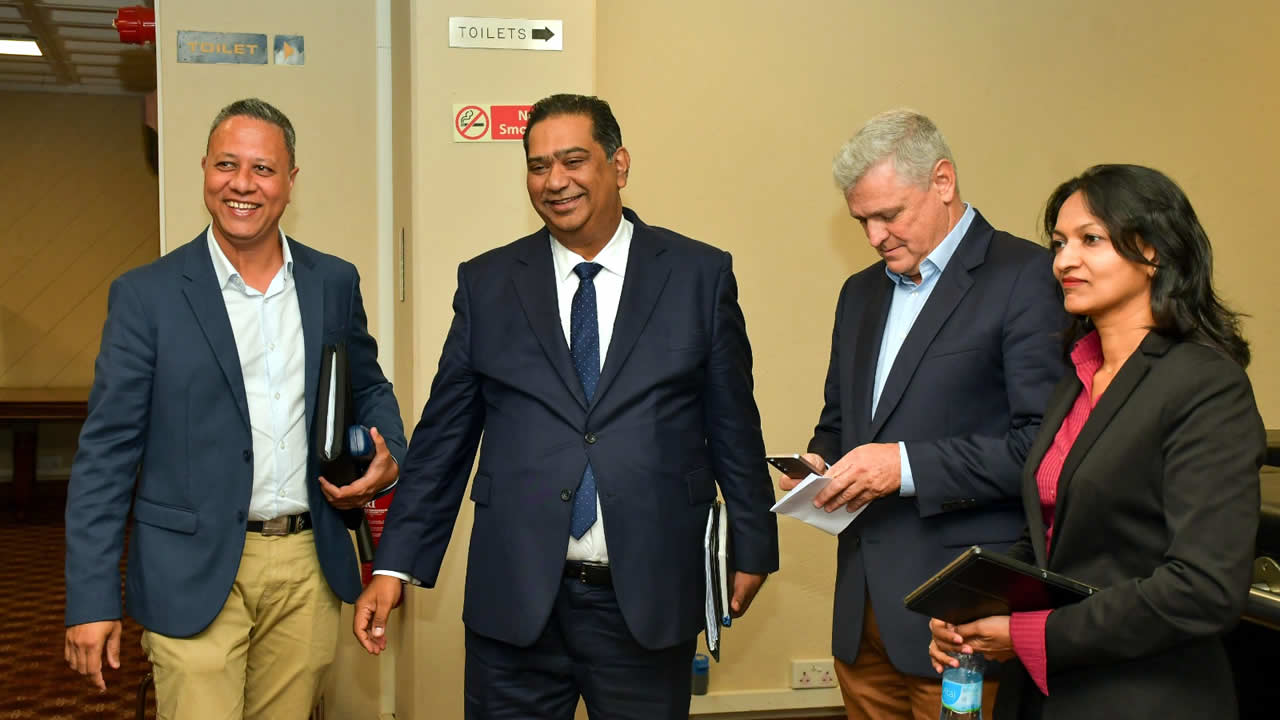
Meeting on April 30, several consumer associations presented their budgetary proposals to the Junior Minister of Finance. These are focused on lowering costs, revised taxation and better targeting of aid.
Consumer associations took advantage of their meetings on April 30 with the authorities to voice their priorities for the 2026-2027 budget. In a context marked by a continued rise in prices and increased pressure on households, their proposals converge towards a central objective: that of containing the erosion of purchasing power while improving the effectiveness of public policies.
For Jayen Chellum, secretary general of the Consumers' Association of Mauritius (ACIM), these consultations mark a change of tone. He mentions the receptiveness of the Junior Minister for Finance, as well as the desire to establish quarterly exchanges. A regularity deemed necessary to ensure monitoring of measures and better communication around existing systems, often unknown to the public.
Among the key measures put forward by the ACIM is the abolition of VAT on certain food products, notably canned goods. The objective is to ensure that any tax reduction is effectively reflected in the prices paid by consumers. Along the same lines, the association draws attention to the increase in freight and insurance costs, exacerbated by tensions in the Middle East. It proposes the establishment of a partial freight reimbursement mechanism in order to reduce the final bill.
The ACIM also emphasizes the need to strengthen food security through the creation of an agency bringing together the different ministries concerned. Such a structure would, according to her, make it possible to rationalize controls and improve coordination.
Another area of concern is the ripple effect of tariff increases. The expected increase in electricity prices, combined with that of fuels, continues to weigh on transport costs and, in turn, on the prices of goods. The association is calling for a review of subsidies to mitigate their effects. It also proposes the creation of a pension fund intended for NGO employees, financed from corporate social responsibility (CSR) funds.
Bank charges are another point of tension. The ACIM calls for harmonization in order to make them more accessible to customers, in a context in which financial services have become essential on a daily basis.
For his part, Claude Canabady, secretary of the Consumers’ Eye Association (CEA), places emphasis on taxation. He recalls that the introduction of a progressive taxation system in 2024 constituted progress, but believes that it is necessary to go further. According to him, the highest incomes could be used more to support the most vulnerable categories.
Enjoying Mauritius News in English?
You've used 1 of your 5 free articles today. Subscribe for unlimited access plus a daily newsletter.