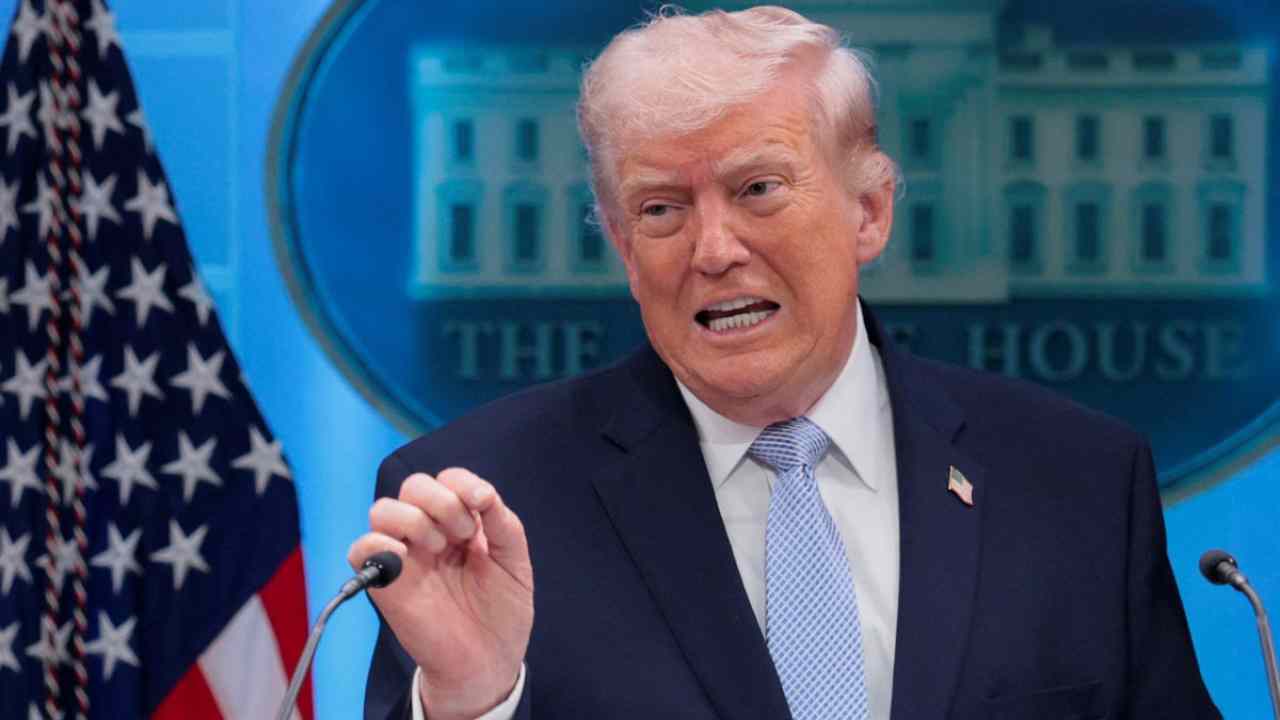
Donald Trump on Sunday ordered a US naval blockade of the Strait of Hormuz, accusing Iran of refusing to give up its nuclear ambitions, after the failure of direct talks between the two camps in Islamabad which aimed to end the war in the Middle East.
Although he affirmed that the discussions, lasting more than 20 hours, had gone "well" and that "most of the points had been the subject of agreement", the American president declared on his Truth Social platform that Tehran had refused to give in on the nuclear issue.
He reaffirmed his readiness to strike Iran's energy infrastructure in the absence of an agreement.
It is in particular by accusing Iran of wanting to acquire atomic weapons - something Tehran denies - that the United States justified the offensive launched with Israel on February 28, which triggered a regional war, causing thousands of deaths, especially in Iran and Lebanon, and shook the world economy.
The United States will begin a "BLOCKING process of all ships attempting to enter or leave the Strait of Hormuz" through which part of the world's oil, gas and fertilizers pass, wrote the American president in his first reaction to the announcement during the night of the failure of the negotiations.
But he did not provide any details on the modalities of such an operation, even though this strategic passage has been blocked by Iran since the start of the war.
The Revolutionary Guards responded by threatening to trap their enemies in a "deadly whirlpool", claiming to have "completely under control" the strait's traffic.
Tehran has established de facto rights of passage to cross it, and which it intends to maintain. After seeming open to the idea, Donald Trump warned Iran on Thursday against implementing any toll, an option also deemed "unacceptable" by the European Union and which divides in the Gulf.
On Saturday, the US military said two of its destroyers had crossed the strait in an operation prior to its clearance. A U.S. warship has passed through the strait, while hundreds of commercial ships remain stuck in the Gulf, according to tracking data from MarineTraffic.
“Painful concessions”
In Iran, after six weeks of bombings, rationing of bread or gasoline and an internet shutdown of an unprecedented duration imposed by the authorities, the failure of the negotiations is a blow.
“We are overcome by despair and the feeling of helplessness. We have had enough of this uncertainty,” reacts from Tehran Nahid, a 60-year-old housewife who speaks on condition of anonymity.
The Iranian Forensic Medicine Organization cited by the official IRNA news agency said on Sunday that it had identified 3,375 people killed since the start of the war.
As soon as the impasse in direct talks was announced, Pakistan, a key mediator, called for the maintenance of the two-week truce agreed between Tehran
Enjoying Mauritius News in English?
You've used 1 of your 5 free articles today. Subscribe for unlimited access plus a daily newsletter.