â Reservoirs: drop to 64%
Here we go again for a ride. As was to be expected, the average filling rate of the island's seven reservoirs fell below 65% this week. With an average of 64.1% yesterday, the situation is becoming more and more worrying. The Minister of Energy and Public Services, Patrick Assirvaden, went to the Mare-aux-Vacoas reservoir on Monday, where the water level is much lower than usual, 50.7% full, compared to 85-90% usually at this time. In the current situation, the Water Resources Monitoring Committee, which brings together the Ministry of Energy, the Central Water Authority (CWA), the Water Resources Unit (WRU), the Irrigation Authority and the Vacoas weather station, should opt for radical measures to save the limited water resources available.
Driving through the streets in winter during torrential rain is not really fun when it involves, among other things, zigzagging between puddles of water littering the ground or running the risk of being sprayed with muddy water by motorists. Except that with the water level in our reservoirs dropping by 2% to 5% each week and reaching more than alarming levels, we should strongly hope that rain falls abundantly in the month of May. Our eyes were glued this week to the gray sky and we witnessed sometimes stormy showers in the four corners of the country. Which could have allowed Patrick Assirvaden and his close collaborators to breathe a sigh of relief. Nay! The minister, who visited the Mare-aux-Vacoas reservoir, a source of supply for Hautes Plaines-Wilhems, as well as certain regions in the South, noted a filling rate of 50%, or nearly 34 points below the seasonal normal.
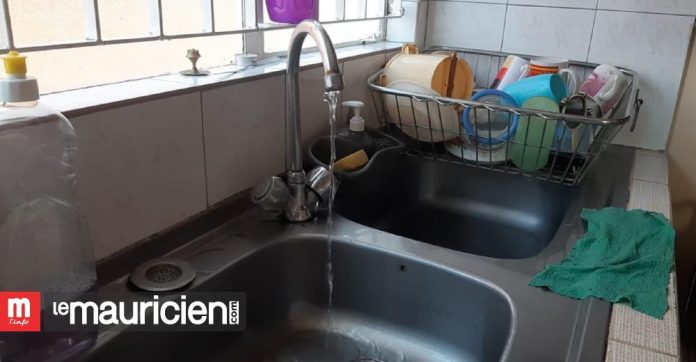
At the end of his visit, he ordered the Water Resources Commission and the Central Water Authority to immediately develop a restriction plan: “Pou bizin ena bann restriction. We can do business as usual so we can do more business as usual. He announced two distinct sets of measures: on the one hand, imminent restrictions in the distribution of water, with a reduction in supply hours in certain areas; on the other hand, specific measures aimed at limiting waste, in a context where demand remains high in several sectors.
The issue is concrete and quantified. Maintaining the current distribution volume would lead the reservoir to display no more than 22 to 23% of its capacity by June, a threshold below which pumping would become technically impossible, the sludge and sediments accumulated at the bottom making the extraction of water out of reach. scope. “Se do not gete de ker ki nou bizin met restriksion. We have responsibility for it (the kant
Enjoying Mauritius News in English?
You've used 3 of your 5 free articles today. Subscribe for unlimited access plus a daily newsletter.



![[Info Soirée] : "He wanted to burn the shop there"](/media/article_images/ad7f1cd9c711.jpg)