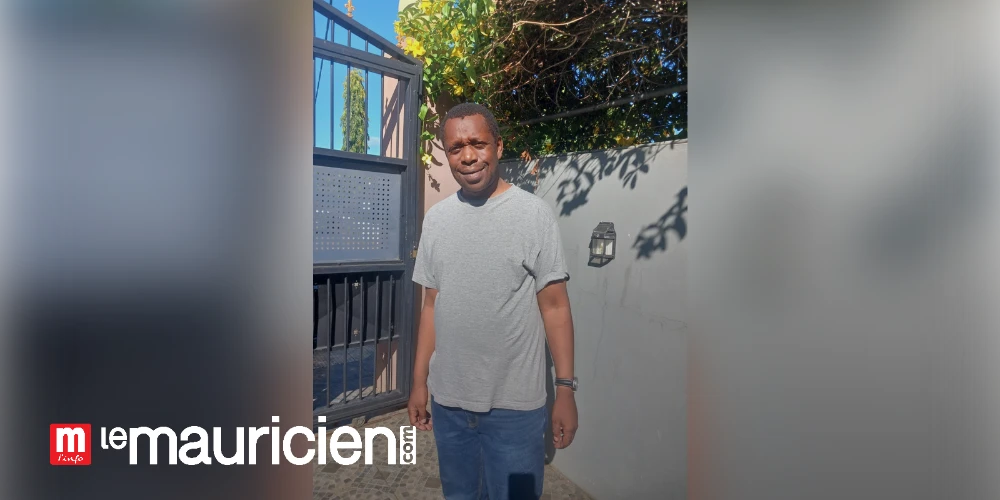
Iréné Barahira is the son of a major historical figure in Rwanda. Her mother, Agathe Uwilingiyimana, was the first woman to serve as Prime Minister of the country. On April 7, 1994, in the first hours of the genocide, she was brutally assassinated by the presidential guard. Her husband suffered the same fate. Iréné and his siblings helplessly witness the chaos. They narrowly escaped death thanks to the protection of peacekeepers and diplomats. And very quickly exiled to Switzerland.
It is in Flic-en-Flac, in the house of one of his friends, based in Switzerland, that we meet him. Despite the painful memory that inhabits him and the traumas of a broken youth, he agrees to give us his testimony. During his story, Iréné Barahira's gaze is sometimes lost in space. However, his voice remains firm and determined. After sharing his story with Swiss and French media, he continues to testify so that the world never forgets the horror of the genocide.
Before the tragedy, Iréné Barahira was 18 years old. He is a high school student and dreams of becoming a social worker. “My family lived a happy life in Kigali in a large official house. My father, 43, was a law professor at university. And my mother, Agathe Uwiringiyimana, 41 years old, was the Prime Minister of the country. My sister, Marie-Christine, was 16 years old, and my brothers Christian, Michel and Théo were 14 years old, 5 years old and 3 years old respectively. We had domestic staff and enjoyed a comfortable life. Due to our mother's duties, eleven Belgian peacekeepers ensured our protection,” he confides. During official trips, the children traveled a lot across the country. A golden childhood that will be cut down in mid-flight.
The morning when everything changes
On April 6, 1994, the presidential plane was shot down. The next morning, chaos sets in. The family home is attacked by soldiers. The eleven Belgian guards are captured and cowardly killed. Iréné's parents are taken away by force. Even today, children do not know where their bodies are or how they were executed.
That day, Iréné and his four brothers and sisters were saved by brave neighbors who hid them. “Our parents wanted to make sure we were safe,” he says. Despite their young age, the children understand the seriousness of the situation and maintain a heroic calm. “My brothers and sisters understood what was happening and they remained calm,” he continues. This dramatic event marked the beginning of the genocide of the Tutsi and the massacre of the Hutus which would last three long months.
Hunted because they are the children of the Prime Minister, the five brothers and sisters must flee. “From April 7 to 11, we managed to hide in a hotel in Kigali, in the middle of the terror. Then, taking advantage of the evacuation of
Enjoying Mauritius News in English?
You've used 1 of your 5 free articles today. Subscribe for unlimited access plus a daily newsletter.