Galvin Ramsamy, Director at JurisComply, analyzes the 2026-2027 Budget through the prism of financial services, compliance and competitiveness of the Mauritius International Financial Centre. For him, the Budget contains several encouraging signals: regulatory modernization, fintech, wealth management, better supervision, use of technology and preparation for international requirements. But the real test will be less in the announcement than in the implementation.
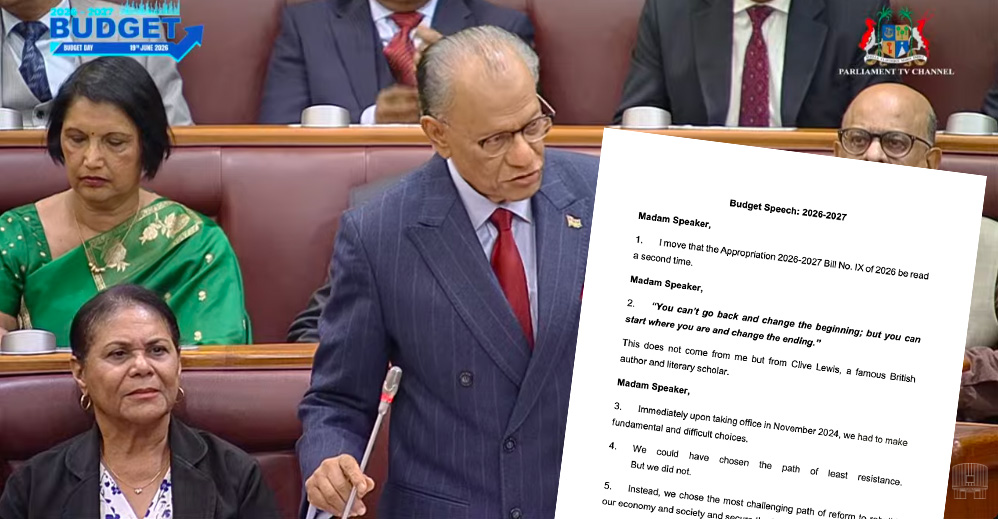
For households and investors alike, this Budget should be reassuring. What general impression does it leave you? The 2026-2027 Budget presented by the Prime Minister and Minister of Finance, Dr Navinchandra Ramgoolam, appears both as a transitional Budget and as a test Budget. It is a continuation of the previous year, while placing greater emphasis on the structural transformation of the Mauritian economy.
The challenge was to meet three expectations at the same time: protect households, preserve the credibility of public finances and create the conditions for a resumption of investment. It was not an easy exercise. The government had to avoid two traps: doing too much social work without budgetary discipline, or imposing too much discipline without taking into account the reality of families and businesses.
In my opinion, the intention is positive. The Budget seeks a balance between support, responsibility and recovery. Beyond social and fiscal measures, it also reflects a clear desire to strengthen the country's institutional credibility, modernize its regulatory framework and prepare for the next phase of development of the Mauritius International Financial Center.
But a Budget is not an arrival, it is a flight plan. Everything will now depend on execution: the speed of decisions, the clarity of measures, the ability to reassure investors and the way in which announcements will be translated into concrete terms in the economic life of the country.
Compliance is often seen as a technical subject. Why has it become central to Mauritius? In an international environment where financial jurisdictions are increasingly evaluated on their ability to demonstrate compliance, transparency and resilience, Mauritius appears to have chosen a strategic direction based on trust and robustness rather than simple tax competitiveness.
One of the most striking elements of the Budget is the importance given to the preparation of the mutual evaluation of the ESAAMLG scheduled for 2027. This deadline constitutes a major test for the jurisdiction and several measures announced reflect a desire for anticipation rather than reaction.
Do the announced measures meet the expectations of the financial sector before the ESAAMLG assessment of 2027? The government plans in particular the creation of a National Crime Agency in order to strengthen investigations linked to criminal fraud.
Enjoying Mauritius News in English?
You've used 4 of your 5 free articles today. Subscribe for unlimited access plus a daily newsletter.