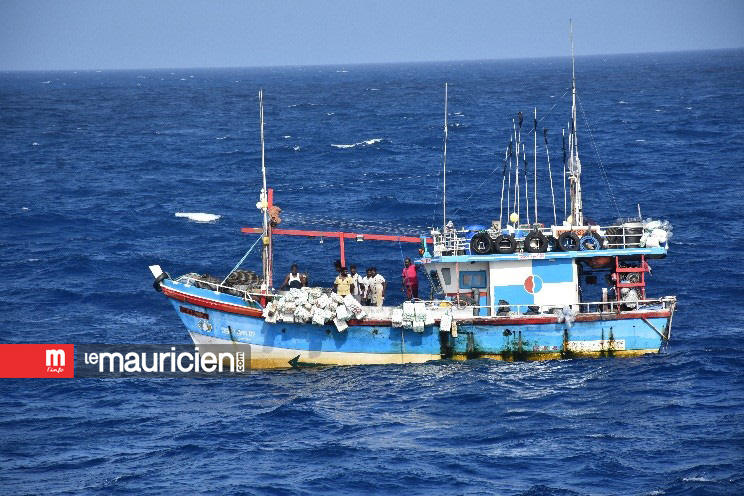
While the crisis in the Middle East has served as a reminder of the need to consolidate the urgency of food self-sufficiency, the semi-industrial fishing sector is in an impasse. The surge in the price of diesel has had a significant impact on operating costs. With the future increase in the price of electricity, small operators fear the worst, because they have to buy 250 to 300 bags of ice cubes for the needs of a fishing campaign.
A few years ago, the government encouraged fishing cooperatives to become semi-industrial. With the help of the European Union, a plan was put in place to acquire semi-industrial fishing boats. To date, four cooperatives have benefited from this aid. They were financed to the tune of 50% – representing Rs 4 million initially, then Rs 6 million – and had to borrow the remainder from MauBank.
But today, with the conflict in the Middle East continuing and the impact on the price of fuel, these small operators are on the verge of asphyxiation. Judex Rampaul, president of the Fishermen's Union and member of the cooperative, which manages the boat Perfect One, is sounding the alarm that the situation is very critical. "For a 15-day fishing campaign, we need 3,000 liters, or three tons of diesel. Two months ago, the amount was Rs 99,000, today it is Rs 210,000,” he explains.
Fishing cooperatives benefit from a fuel subsidy, but this is very minimal. For example, the price of diesel at the pump is Rs 71.25. The fishermen pay it at Rs 69.50. “For a fishing campaign, it is not only the fuel that counts. Given that the crew remains at sea for 15 days, food must be provided for 15 days and as we know, everything has increased. Then you have to buy ice cubes to preserve the fish and pay for insurance. Basically, I can say that the total bill for a fishing campaign went from Rs 280,000 to Rs 425,000 in a short time,” says Judex Rampaul.
With Central Electricity Board (CEB) electricity rates, which will be revised upwards from May 1, small operators are preparing to face a new wave of increases in operating costs. “Just for the ice cube, it there will certainly be an increase. For a campaign, we need 250 to 300 sachets of 1 kg. Today, it sells for Rs 100. We don't know what the price will be in the future,” he adds.
This situation will further push fishing cooperatives towards asphyxiation and the future looks very uncertain. “We were encouraged to leave the lagoon, we did it and we have the desire to contribute to food self-sufficiency, but we are on the verge of the breakup.
Enjoying Mauritius News in English?
You've used 1 of your 5 free articles today. Subscribe for unlimited access plus a daily newsletter.