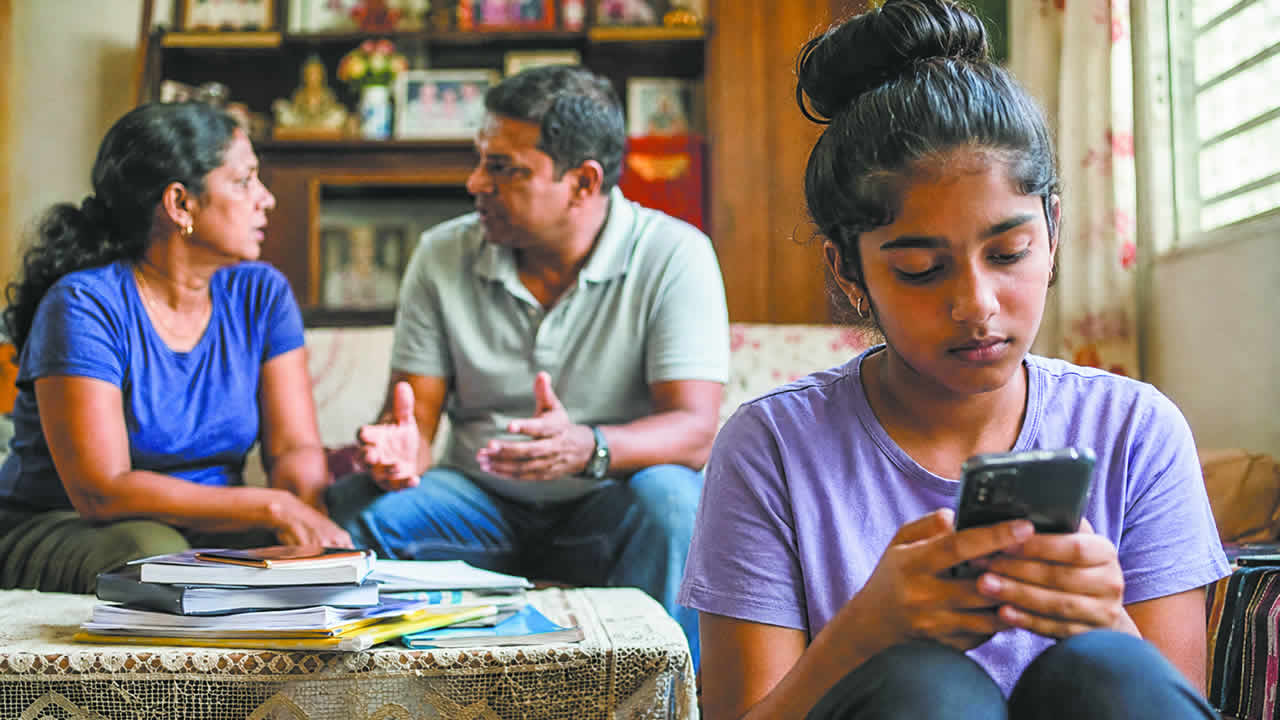
The campus HIV prevention project is welcomed by grassroots organizations. But these pose a precondition: that we begin by breaking the silence that reigns in Mauritian families.
It is not at school that prevention fails first. For the social workers and coordinators who support young Mauritians on a daily basis, the real divide lies upstream, in the home, between a parent who does not know where to start and a child who does not dare to ask. It is this silence, more diffuse, less visible than the school void, which conditions everything else.
“In many Mauritian families, modesty, religious convictions, or simply the absence of tools and knowledge make these discussions difficult. This can limit young people’s access to complete and reliable information at home,” observes Agnès Mallet, coordinator of the Youth Department for Family Action.
To this silence is added another, more rarely named. Priscilla Bignoux, social worker at the Souillac Social Group, observes that parents focus more on their child's academic results, "forgetting that sexuality is part of being human." In the hierarchy of family priorities, the body, emotions, relationships come second to grades... until the day something happens.
What this silence produces is not just a lack of information. Priscilla Bignoux describes the mechanics with a precision that comes from the field. “The silence of families on the question of sexuality brings a void: the void of language, the void of relationships, the void of trust. The child will then go elsewhere to look for their information,” she says.
Elsewhere means peers, screens, algorithms. And the question of the age at which it begins is no longer theoretical. “Nowadays, even a one-year-old baby knows how to operate a cell phone. There is therefore a rejuvenation of access to technology. Therefore, information must be given from an early age and not wait until children are adults,” she insists.
This shift towards external sources is a mechanical consequence of absence. And what these sources produce, Vidya Charan, director of the Mauritius Family Planning and Welfare Association (MFPWA), measures on a daily basis. “When there is dialogue and education, the adolescent or young person understands and begins to reason, and this will help them make better decisions,” she explains.
Information collected without this framework – from peers, social networks, or unverified sources – “often distorts reality”. Misconceptions take hold about HIV, STIs, contraception and emotional relationships, leading to an underestimation of the risks and, often, an increasing distance from parents.
Priscilla Bignoux goes further. For her, the subject
Enjoying Mauritius News in English?
You've used 1 of your 5 free articles today. Subscribe for unlimited access plus a daily newsletter.