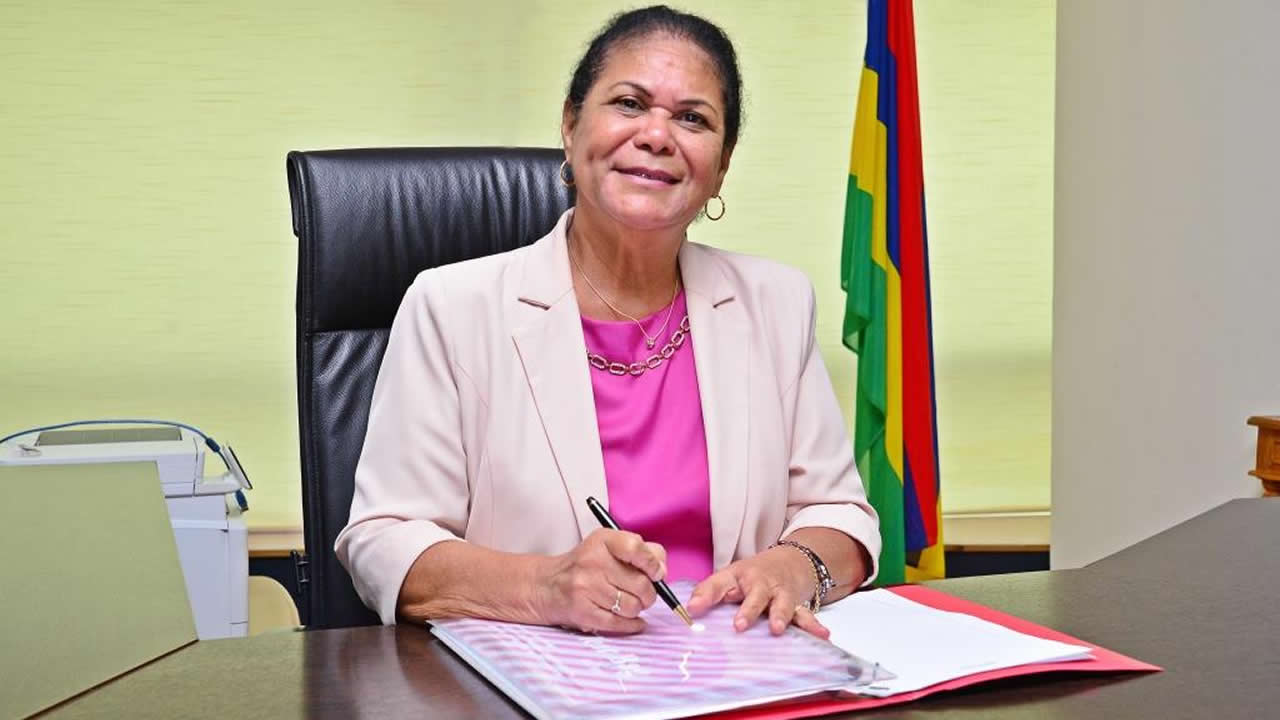
The Deputy Prime Minister and Minister of Gender Equality and Family Welfare details the legal and political levers mobilized to reduce economic inequalities between women and men. Between international commitments, legal framework and structural measures, Arianne Navarre-Marie highlights the scale of persistent challenges and the need for systemic action to achieve true equality.
Mauritius is a signatory to international conventions such as CEDAW, which explicitly recognizes the right to equal pay. How are these commitments translated into practice? Mauritius' international commitments are firstly reflected through a clear legal framework regarding non-discrimination, notably the Constitution, the Equal Opportunities Act, the Workers' Rights Act and the Employment Relations Act. But beyond the legal principle, we must also act on the structural obstacles that slow down the economic progress of women. This involves measures promoting a return to employment after a career break, support for female entrepreneurship, the integration of the gender dimension in public policies and initiatives aimed at better reconciling family and professional life.
The figures also show that the challenge goes far beyond just the question of salary for equal positions. Gaps also concern access to employment, unemployment, career progression and the distribution of family responsibilities.
The government often insists on the country's economic compliance with international standards. Does the same rigor apply to commitments regarding gender equality? Yes. The National Gender Policy 2022–2030 constitutes our main strategic framework for gender equality. It relies on interministerial coordination mechanisms as well as Gender Cells within the ministries and institutions concerned. Progress is assessed through various indicators, including women's participation in economic life, their access to employment, their presence in decision-making positions and their economic and social empowerment. Labor market statistics also make it possible to measure persistent gaps. They show that, despite progress, significant imbalances remain, which confirms the need to continue efforts.
The obstacles remain structural.
Beyond the principles, what concrete actions are being implemented today to reduce these inequalities? Our action mainly focuses on the structural causes of economic gaps. This includes supporting women towards employment or their professional reintegration after a career break, support for female entrepreneurship, the integration of gender in public budgeting as well as measures aimed at better balancing professional and family responsibilities, notably
Enjoying Mauritius News in English?
You've used 2 of your 5 free articles today. Subscribe for unlimited access plus a daily newsletter.