â A series of restrictive measures targeting non-essential uses launched this week
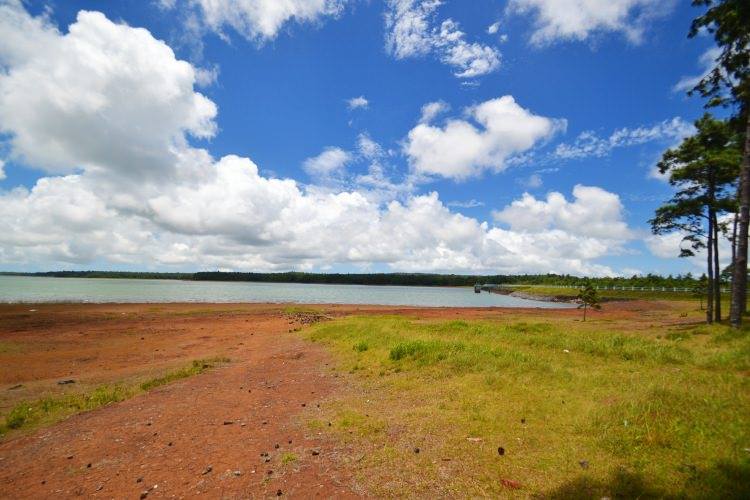
Scarce water, oh despair! The sky has been stingy with rain over the last two months: weather which has harmful consequences for reservoirs and groundwater. Certainly, we are still a long way from the historic water shortage crisis of November and December 2022, when the overall level of reserves had fallen below 30%, but the fact is that Mare-aux-Vacoas and La Nicolière, with respective rates of 41% and 48%, are in free fall. This exponential decline has major impacts on the supply of the precious liquid and contrary to what Nitish Joganah sings, "Dilo Pou Arete 9-er", the water no longer flows at all, or even in drips, in certain villages in the north. The narrow time slot – already applied in certain neighborhoods to have access to water – will shrink like nothing, because the Central Water Authority (CWA) will unveil this week a series of restrictive measures targeting non-essential uses of the precious liquid.
This is a burning issue which raises the prospect of a stormy end to 2026 for the main players in the sector. With reservoir water levels dropping by 3% to 5% each week, it is high time Mother Nature provided some of her bounty. Except that the weather forecasts don't bode well for this week and those to come. The joint press release issued by the Water Resources Commission and the CWA specifies that “the Mauritius meteorological station predicted that the winter season would record approximately 70% of normal precipitation. However, to date, only 37% of the expected rains have been recorded, a significant deficit which is weakening the country's strategic reserves.
The consequences for the population are extremely serious... Heavy as the water cans carried by the long cohorts observed this week along the road in certain villages in the north of the island, such as in Triolet where the inhabitants have their nerves on edge. Exactly one month ago, on July 2, La Nicolière, the main source of supply for the districts of Pamplemousses and Rivière-du-Rempart, had a occupancy rate of 74%. It is today 48% full. The situation is turning into a catastrophe in that it concerns Mare-aux-Vacoas, whose worrying drying up is not solely due to the lack of precipitation, according to certain evil tongues which speak of "diversions". Maintain the volume current distribution would lead the reservoir to display no more than 22 to 23% of its capacity by the end of August, a threshold below which pumping would become technically impossible, the sludge and sediments accumulated at the bottom making the extraction of water impossible. of range.
Again
Enjoying Mauritius News in English?
You've used 1 of your 5 free articles today. Subscribe for unlimited access plus a daily newsletter.

![[Evening Info]: “Veronique oci pou interoze”](/media/article_images/3f0ff8612f00.jpg)