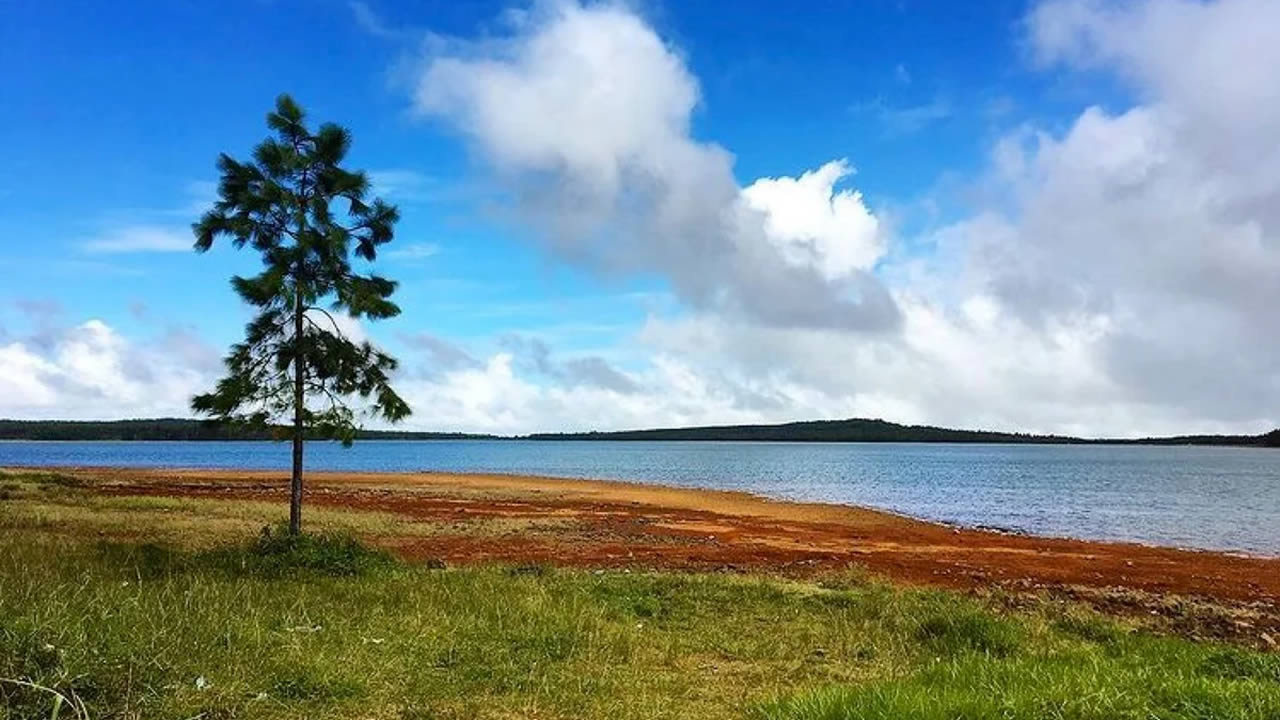
Faced with the drop in Mare-aux-Vacoas to 44.1%, water cuts will begin on Wednesday in several regions. The other areas, dependent on other sources, remain spared for the moment.
While water restrictions will come into force this Wednesday in several regions of the country, all Mauritians will not be in the same boat. While residents of Upper and Lower Plaines-Wilhems, part of Rivière-Noire and Baie-du-Cap will have to adapt to limited distribution, other regions will continue, for the time being, to benefit from a relatively normal supply.
This difference is explained above all by the way in which the country is supplied with water. Because contrary to popular belief, Mauritius does not depend on a single source of supply. Each region is connected to distinct reservoirs, watersheds and distribution networks, the levels of which vary greatly depending on climatic conditions. In the case of the regions affected by the restrictions, the common point has a name: Mare-aux-Vacoas. The country's main reservoir, it supplies a large part of Plaines-Wilhems and Moka as well as certain regions in the West. However, its level has now fallen to 44.1%, a rate much lower than that recorded at the same period last year. Faced with this decline, the authorities chose to act before reserves decreased further.
“The measures will take effect from Wednesday and concern more precisely the central region, part of Rivière-Noire and Baie-du-Cap. These regions will be affected and there we are talking about at least 150,000 households. The supply will mainly be done in the morning,” explains Shiam Thannoo, Chairman of the Central Water Authority (CWA). The decision immediately raised questions among users. Why are some regions already expected to undergo restrictions while others still seem relatively spared?
For Dev Gujjalu, former CWA chief engineer and hydrology expert, the answer lies mainly in the source of supply for different regions.
“The north of the country as well as the east are stable because they do not depend on the Mare-aux-Vacoas reservoir,” he underlines. In other words, the current situation does not reflect a uniform shortage on a national scale, but a particularly strong pressure on certain supply systems.
This situation is partly linked to a phenomenon that has become increasingly visible in recent years: the uneven distribution of precipitation across the territory. “Today we have a situation called microclimate. Rain is present in one region and not in others. Last year, Mare-aux-Vacoas had above 60%, but today we are facing an exceptional situation in the absence of rain,” explains Shiam Thannoo. While some regions benefited from rainy episodes
Enjoying Mauritius News in English?
You've used 5 of your 5 free articles today. Subscribe for unlimited access plus a daily newsletter.