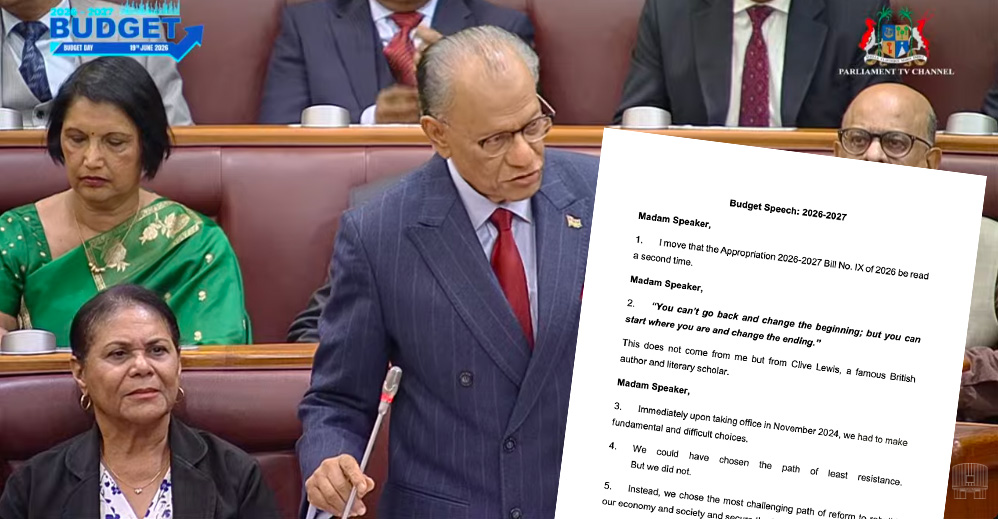
The Minister of Finance, Dr Navin Ramgoolam, announced social measures. There is, among other things, maternity leave extended to one year, paternity leave extended to six weeks and the introduction of menstrual leave.
Maternity leave will be extended to twelve months. According to the Prime Minister and Minister of Finance, the first six months will be paid at full salary, guaranteeing financial security to mothers, while the following six months, optional, will be granted at half salary. This measure aims to offer women more time to care for their child while preserving their career.
Paternity leave, for its part, will be extended from four to six weeks. This development allows fathers to be present in the first months of the child’s life.
Another measure that appears in the budget annex is the introduction of menstrual leave in the public and private sectors. Women suffering from severe symptoms, such as dysmenorrhea or related migraines, will be entitled to one day of paid leave per month. This measure responds to one of the requests from the Raise Brave Girls association.
These measures aim to provide better support to parents and promote a better balance between professional and family life.
Small business fears
Faizal Bahemia, entrepreneur, says he understands and respects the government's desire to improve the living and working conditions of employees. However, according to him, several measures announced in the 2026-2027 Budget raise important questions for small and medium-sized businesses. He cites the extension of maternity leave.
“The key question is who will bear the real cost of this measure. For SMEs, which have limited resources, the prolonged absence of an employee represents an operational challenge. If, in addition, the company has to bear a significant part of the costs, this measure risks further weakening sectors in which margins are already extremely reduced. » “In our case, we operate in an industry where prices are controlled. Since the covid-19 period, margins have practically not been reviewed while all costs have increased: fuel, transport, raw materials, exchange rates, rents and salaries. Today, we are still asking companies to make additional efforts without it being clear what support measures will be put in place,” he adds.
For him, the same question arises regarding menstrual leave. He maintains that: “the principle can be laudable, but we must also think about its financing and its impact on the organization of companies. Any increase in costs inevitably ends up being reflected somewhere in the economic chain. » The entrepreneur also cites the measure providing that if a public holiday falls on a Sunday, it is postponed to Monday. “For many sectors it
Enjoying Mauritius News in English?
You've used 1 of your 5 free articles today. Subscribe for unlimited access plus a daily newsletter.