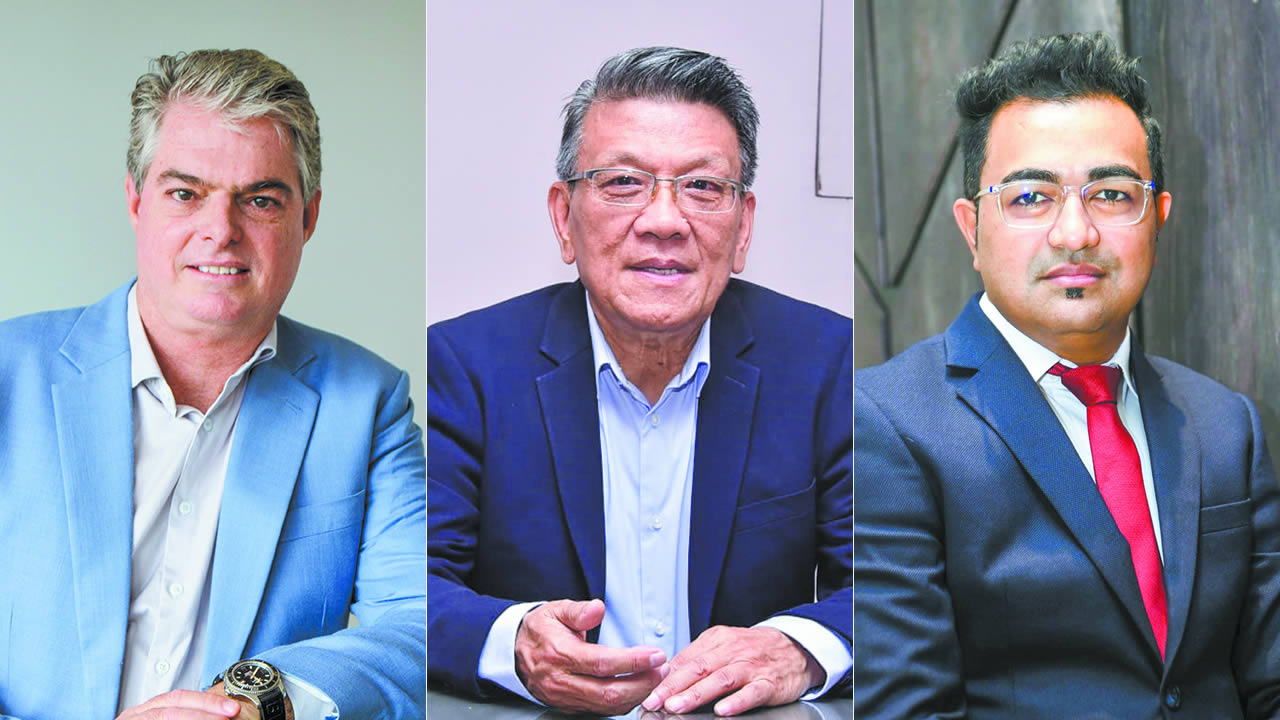
Three economic observers decipher the main measures of the 2026-2027 Budget, while assessing the strengths and weaknesses. For them, the real challenge will lie in execution.
Gerald Lincoln: “It is a fairly prudent Budget, in the sense that there is no significant reform, in particular with VAT which remains unchanged. He is also cautious in his desire to launch new sectors. Much has been said about artificial intelligence and education in order to prepare the country for these changes. This is a good thing, but is it enough? I don't know. At least there is a start of education and awareness. It is therefore a prudent Budget, but quite consistent. »
Georges Chung: “For once, wealth creation, production and technology are finding the place they deserve. On this point, we cannot be disappointed. I am thinking in particular of the manufacturing sector, which is benefiting from a certain renaissance with the stated objective of increasing exports from 1.5 billion dollars to 3 billion dollars in three years. Which is complimentary. Unlike some previous budgets, this one gives more priority to economic creation rather than consumption. Artificial intelligence also plays an important role. This is one of the great merits of this Budget, just like the modernization of the airport, which, in my opinion, until now gave the image of the infrastructure of an underdeveloped country. This modernization will certainly please the 1.4 million visitors expected next year. The big challenge, however, will remain execution. The Budget is a true Budget of intentions. The challenge is to transform words and writings into concrete actions. This will be the government's main challenge over the next twelve months. I would also advise them to set up a high-level committee responsible for monitoring budget execution, which would meet at least once a week. »
Tahir Wahab: “This Budget contains many measures which remain, in my opinion, quite superficial. There has been a lot of talk about education, health and housing, the blue economy. The ideas are numerous, but the means to bring them to fruition seem insufficient. Concerning the financial sector, I wonder about the investments planned to preserve the reputation of Mauritius as an international financial center. Likewise, Mauritius faces an energy crisis. What concrete measures have been taken to reduce our dependence on fossil fuels and encourage the development of new energy sources? I don't see enough incentives for businesses to invest more in renewable energy. That said, some measures are positive. Investments in civic education are going in the right direction. Agricultural measures linked to food security are also important, while
Enjoying Mauritius News in English?
You've used 1 of your 5 free articles today. Subscribe for unlimited access plus a daily newsletter.